The artworks on the site are only a small part of our collections. You can see the all on the latest catalogue and our gallery.
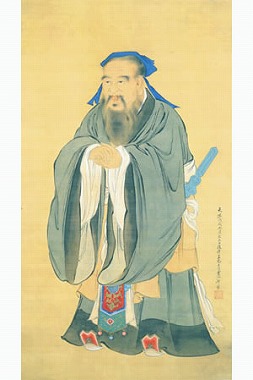
Watanabe Kazan
A painter and statesman of the later Edo period. He was born in the Edo residence of the Tahara domain of Mikawa, the eldest son of Watanabe Sadamichi, a retainer of Lord Miyake; he was commonly known as Nobori. From childhood he took up the study of painting to help support a household in real poverty. He later studied under Tani Buncho and made his name as a painter of the realist school, while also succeeding, through the Western use of light and shade, in painting portraits of remarkable verisimilitude; Portrait of Takami Senseki and Portrait of Sato Issai are among the finest. As chief retainer of his domain he showed real ability as an administrator: during the Tenpo famine he established a relief granary and not one person in the domain starved. In 1833 he joined the Shoshikai, a society formed by Takano Choei, Koseki San'ei and others to strengthen Japan's coastal defences. The society was in effect a secret association of scholars of Western learning; in 1839 it was proscribed, and in the resulting persecution known as the Bansha no goku, Kazan was sentenced to confinement in Tahara. He had criticised the shogunate's defence policy in his essay Shinkiron. While under confinement he sold paintings to live, and when this was denounced as improper he took his own life in Tahara, fearing that the blame would fall on his lord.