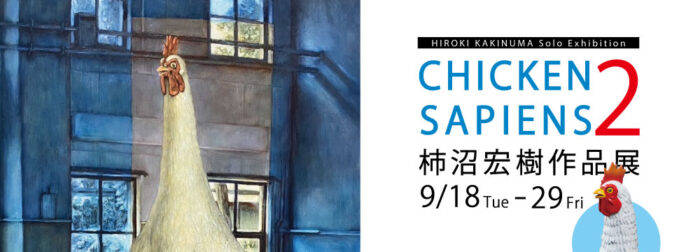
Hiroki Kakinuma: CHICKEN SAPIENS 2 — Celebrating the Second Figure Release
September 18 (Fri) – September 29 (Tue), 2026
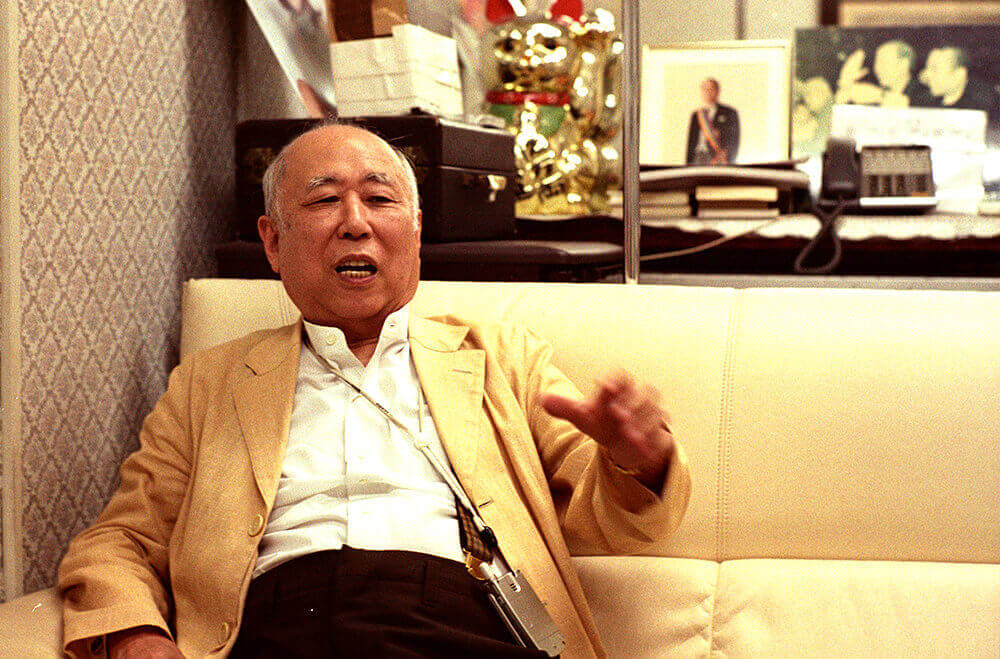
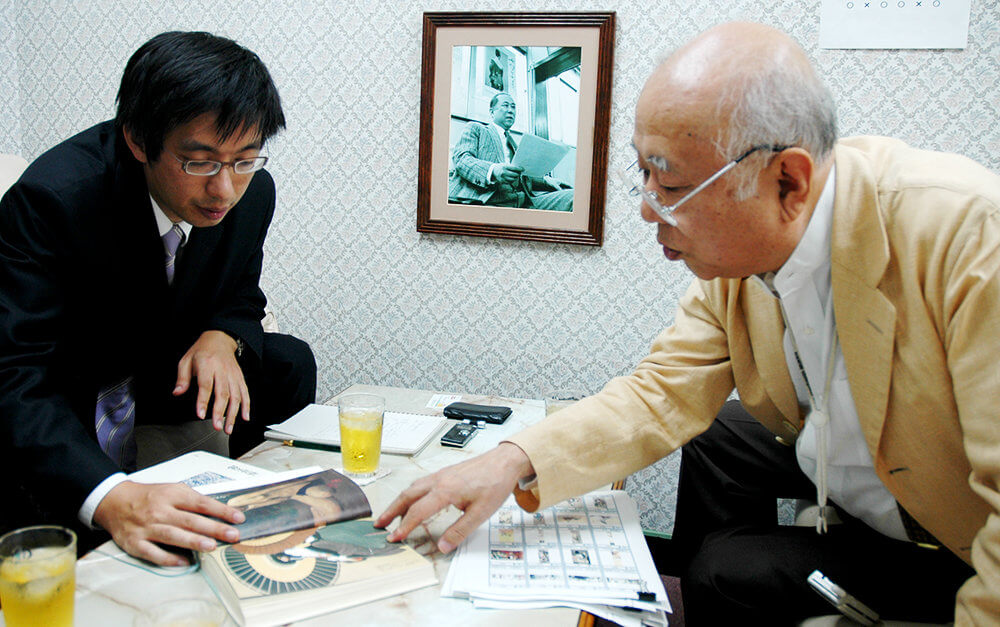
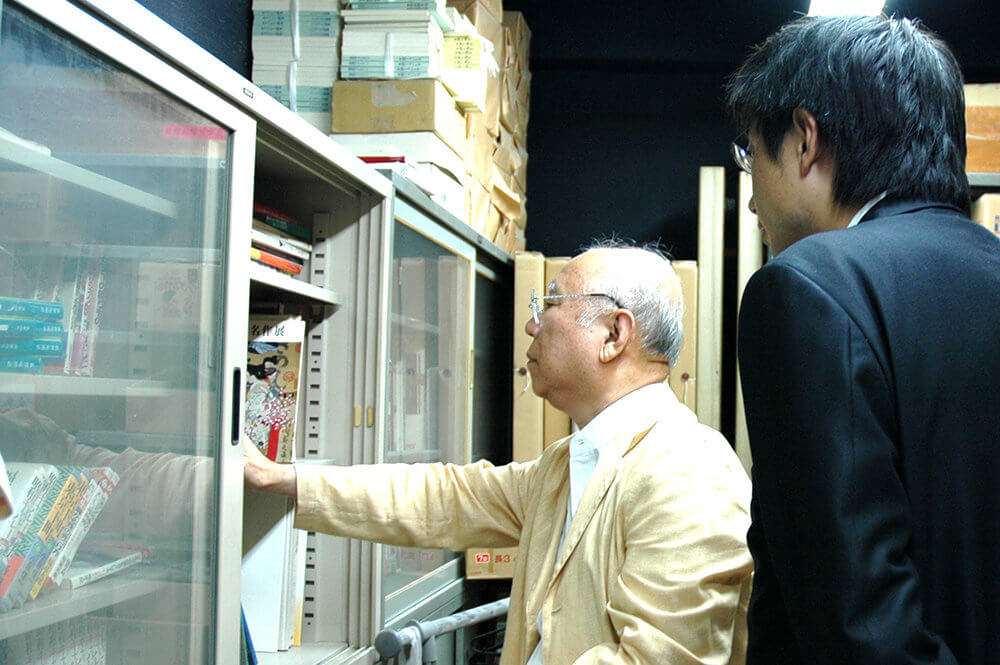
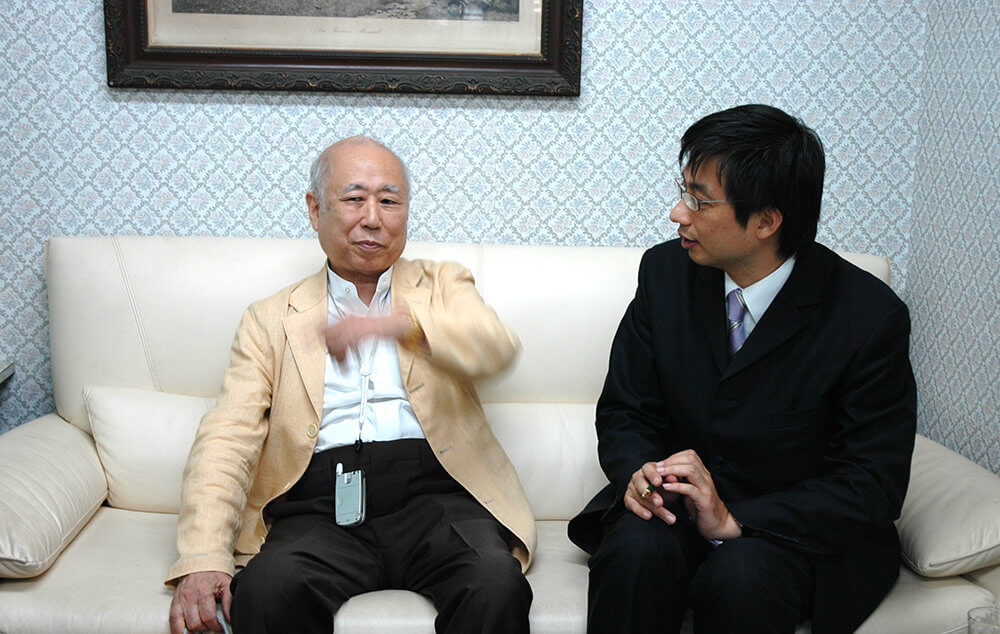
Our guest this time is Fukutomi Taro. Founder of the Hollywood chain of cabarets, known affectionately as the “cabaret king” and “Cabaret Taro”, he was one of the outstanding figures of postwar cultural life. He collected pictures for more than fifty years, and told us the striking story of buying them in years when he went without food and walked about without shoes. From his long experience as a proprietor he also passed on to a young dealer what a man of business ought to know. We went to the Hollywood office armed with a list of questions — and this is what came of it.
Fukutomi Taro died in May 2018, aged 86. We offer our sincere condolences. (added 30 July 2018)
Related link: the owner’s blog — the cabaret funeral of Fukutomi Taro, that rare collector of bijinga (in Japanese)
Born in Tokyo in 1931. Cabaret proprietor. He collected pictures for more than fifty years, and his collection, centred on bijinga and war paintings, is known as the Fukutomi Collection and has often been shown in books and exhibitions. His writings on painting include “My Detective Theory of Picture Collecting”, “Ito Seiu: a self-portrait in words” and “The Riddle of the Painted Woman”.
Tanaka Chiaki (below, Chiaki) I have only just come into this world myself; before that I was in another line of work. People often ask me how to choose a work, and where one ought to buy. I want to learn how our customers feel when they buy, and I should like to show people who are about to buy art for the first time what buying art actually is. That is what I have come to ask you about today.
Fukutomi Taro (below, Fukutomi) First of all, let the customer make money. If a picture your customer bought becomes worth five or ten times as much, there is no better feeling. Around the time of the Olympics the well-known Professor Okuno Shintaro told me to search the whole country and buy everything I could by Nakazawa Hiromitsu in Western-style painting and by Kawanabe Kyosai in Nihonga. I said I did not know how to look at pictures, and he said that with these painters there is neither fake nor genuine — just buy them all. Buy, and after ten years or more the price is bound to rise, so buy and go on buying. So I bought.
Chiaki At what age was that?
Fukutomi When I was about thirty, around the time of the Olympics. And some of them rose by far more than ten or twenty times. The good ones are worth a considerable sum. Afterwards I made Mr Okuno a present of one, of course. He really did let me make money then. So letting the customer make money is what matters.
Fukutomi With pictures too — when a man brings one to a dealer and says, look what I have bought, the dealer who answers “you have made quite a purchase there, Mr Fukutomi; that was expensive” is no good. Some of them will run down the other dealer as well. There is nothing to do but praise the customer. “Ah, you have bought a fine picture.” A first-class dealer always praises. Even when you tell him the price: “Ah, you have got that at a good price.” He will never say “you paid too much.” He is a gentleman. He praises.
Chiaki I see.
Fukutomi Let the customer buy something good and cheap. And when it rises in value, he is delighted.
Fukutomi I did well out of the Tomioka Eisen I bought from your father. But your father, once the bidding starts, never gives way. The whole Shibunkaku line is the same.
Chiaki (perspiring) A great many of them hate to lose.
Fukutomi That is quite all right. He chases you all the way. And no doubt he sometimes comes to and finds himself in trouble. On the other hand, ordinary fellows keep out of it once Mr Tanaka comes forward. Because in a fight the price only goes up. So in truth the middleman must not let anyone buy at the top price. He lets it go at about seven tenths. To Mr Tanaka, if it is Mr Tanaka. And the remaining thirty per cent of profit he takes from the customer. If someone complains, why let Mr Tanaka have it, then Mr Tanaka pays something to the man who was bidding against him. That settles it. Sometimes there is a fellow who is all voice, and then you throw it at him and make him buy. Now and then that leaves you without a sen and badly out of pocket. But the Tomioka Eisen is a fine picture. It is remarkable that the other side came out for it at all. (See “A word of recommendation” on the front page of our website.)
Chiaki Do you remember the first picture you bought? I believe you came in by way of ukiyo-e.
Fukutomi But I do not care for prints at all now. I do not care for the Edo period itself. I like Meiji prints — Kobayashi Kiyochika and so on. Even those I have sold. You only hold them; you take them out secretly in the middle of the night when everyone is asleep and look at them. A strange business. And being paper they deteriorate. I collected a few once, but they spoil so quickly. So I do not care for them.
Chiaki Did your taste change by degrees?
Fukutomi It changes.
Chiaki At the very beginning it was ukiyo-e.
Fukutomi Yes. But do you know why I came to dislike ukiyo-e? Because I disliked the men who own it.
Chiaki (laughs)
Fukutomi You go to a dealer and you meet the collectors. You ask the price of something you are thinking of buying and are told a million yen. Then some senior collector says, “I bought this for ten thousand. In the old days.” Or, “When I was a boy they were a few sen each.” And what he owns is a better impression than yours. With prints everything is decided by the impression. As time passes the block wears and the printing gets worse. And he says, “I have this one too, and that one.” So although I meant to become the foremost man in the field, it turned out to be very difficult. At the time the Mihara Ryokichi ukiyo-e collection came up for sale, and another collection as well; the two together were a hundred million, and someone said to me, why not make a hundred million and buy them? And while we were talking somebody else bought them outright.
Chiaki Whole collections at a time.
Fukutomi Without those you cannot be the foremost man, so I had had enough, and I stopped. And that is how I came to specialise in paintings rather than prints. And when I bought paintings hard, at first they were all fakes. That was about 1965; I bought perhaps a hundred million yen’s worth.
Chiaki Was buying Kyosai on Professor Okuno’s advice the very first?
Fukutomi Yes. Before that it was Kaburaki Kiyokata alone. My father had bought them and they were burned in the air raids of the Pacific War, so it was a kind of filial duty.
Fukutomi You have to fall for it. And if the picture then goes up in value, so much the better. When it goes down you feel wretched.
Chiaki Acquaintances sometimes say to me that they do not understand buying pictures — that one can simply go and look at a museum. I think there is a pleasure in buying that you cannot know unless you buy. Could you give some advice to people who are thinking of buying, or who are curious about it?
Fukutomi I dislike sport entirely. I have no interest whatever in what some athlete has done; but let me hear that so-and-so has bought a picture, or sold one, and I am on fire. So people who love pictures and people who love sport are different. Talk to a man who does not like pictures and he will not understand; give a fine picture to someone who does not understand and it is wasted. Sometimes I am asked to name a picture that will rise in price, and I answer: if it is a picture you like, it is cheap now, so buy it. But do not buy on the grounds that it will go up.
Chiaki I see. It is a pleasure when a picture you bought out of love is recognised and rises in value — but selling with that as the aim is quite another matter.
Fukutomi In any case, I could not sell my collection for what I paid for it. There are too many ghosts and skeletons in it. I could not get half of what I paid — though a man who wants one would pay ten or twenty times over.
Fukutomi There was a time when this Kyosai came up for a hundred and fifty thousand. Everyone said it must be a fake and laughed. But I thought, wait — perhaps. And I told one of my staff to go in disguise and see whether it was genuine. If I went myself, word would go round that Fukutomi Taro had been to look and the price would rise. When I go, I go in disguise.
Chiaki I see. Then perhaps we had better not write in this catalogue that you go about in disguise?
Fukutomi No, I go everywhere in disguise. Even when there was an exhibition of the Fukutomi Collection — like this. Disguise means only putting on a hat. This head of mine gives me away. And glasses. I wanted to know how ordinary people judged what I had gathered. And what I heard was a lady saying, “Fukutomi Taro talks big, but there is not a single Iwata Sentaro here.” And “no Togo Seiji either.” A bijinga collection with no Togo Seiji is no good, she said, out loud. That stuck in my throat, so afterwards I bought one. Twenty-five million, I think it was.
Chiaki Twenty-five million is a great deal.
Fukutomi It was the bubble years. And there was a hole in it. But I think it good. Togo Seiji in his later years becomes — to put it kindly — “studio work”. Whereas until about 1947 or 1948 he had no money, he struggled, and he painted everything himself. So it is not that any Togo Seiji will do; you must fix your own measure clearly. Painted by Togo alone — the canvas of that period is poor, and the handling is not exactly fine.
Chiaki Your own business is running cabarets. Has that experience, that way of looking at things, influenced your collecting?
Fukutomi None (flatly). It has nothing to do with it.
Though I think my eye for women is not like other people’s. And there is something of that in the pictures too. Hardly any Japanese dislikes Ito Shinsui, but I am not very fond of Shinsui’s pictures. Nor of the faces. I like a ghostly face.
Chiaki In what way do you think your eye for women differs from other people’s?
Fukutomi I like a woman in poor health. Sickly pictures too — this Tomioka Eisen, for instance (turning the pages of his book); I like this one as well (Watanabe Seitei); this is good (Kitano Tsunetomi, a lovers’ suicide). This sort of thing. That is roughly where I went astray.
Fukutomi In Japanese art, Richard Lane and Mr Packard have the eye. Extraordinary men. All the Japanese together are no match for them.
Chiaki It seems to me that they choose properly by their own looking, rather than what authority in Japan has decided is good.
Fukutomi Authority has nothing to do with it, for them.
Chiaki That is true of them, and of Mr Price, who is much talked of now, and of you as well — you all have your own way of looking, your own point of view. Why do you think you came to have a point of view different from other people’s?
Fukutomi Because I lost money. I took things to the dealers’ market to sell. I took out a licence myself. I even went peddling in the provinces, because I could not sell in Tokyo. At such times you show your certificate and say, I am one of you.
Chiaki You did that?
Fukutomi Someone told me that otherwise you cannot get hold of good things. He said, you had better study and take a licence. You sell for about a tenth of what you paid — a loss. Though sometimes it comes round and turns up again.
Chiaki To change the subject — how do you enjoy the works you have bought? Hanging them in the sitting room, or the entrance hall?
Fukutomi I do not hang them. They stay in the storehouse. And I imagine them there.
Chiaki Is that so.
Fukutomi The good ones I never hang at all. They are put away in a properly air-conditioned store.
Chiaki You take great care of them.
Fukutomi I do. What I hang is only the cheap things. Things it would not matter to damage. The genuine, good ones cannot be hung.
Chiaki There are often exhibitions of the Fukutomi Collection. Is that where you see them?
Fukutomi Yes — basically I only look at them there. Otherwise the store. But it is properly managed, and even going there to look is a business in itself.
Chiaki I imagine so, with the security. Have you used a store since you first began collecting?
Fukutomi Yes, from the start. The war paintings are large. Depositing them one by one would be an enormous business. And costly.
(Mr Fukutomi is also well known for his collection of war paintings.)
Chiaki Ordinarily one would think that after buying a picture you hang it in the sitting room, the lavatory, the entrance hall, and enjoy it daily. But not at all.
Fukutomi It would be a waste. Though on the night I buy one I sleep with it beside me. It is a habit of mine. With a picture I always put it on the next bed, and after a day or more I feel I have made it mine; then it goes to the store. After that it would be a waste — and you never know when an earthquake will come, so one cannot rest easy.
Chiaki Was your first purchase at about thirty?
Fukutomi Yes.
Chiaki Some people buy one or two, hang them, and that is the end of it. In your case it became two, three, and then a collection. Did you have that picture in your mind from the beginning?
Fukutomi I meant from the very beginning to become the foremost man in Japan. Not one or two, but to go on buying. So I had a reputation as the fool of a bar boy who went without food and bought nothing but pictures.
Chiaki So you were collecting before you became a proprietor.
Fukutomi What I bought then was Kiyokata. Kiyokata was a kind of revenge — my father’s collection was burned in the air raids of the Second World War, and I meant to win back at least as much as had been burned. And I was told the prices would rise, so buy now.
Chiaki I see.
Fukutomi When a bar boy’s wages were about five thousand yen, I was buying pictures at fifty thousand.
Chiaki Then how did you live?
Fukutomi I had income besides my wages. People used to say, does he really pay fifty thousand for them? On the other hand I did go about more or less barefoot.
And pictures were cheap then. What would cost ten or twenty million today could be had for fifty or a hundred thousand.
Chiaki Put another way, you collected instead of taking the pleasures other people take.
Fukutomi Better to buy a picture than to court a woman, or anything else. When I buy a picture — and it is the same with old books — everyone is astonished: I buy on the instant, without much thought. But if I go out to buy socks because mine have worn through, I think it over and come home without buying. These shoes (showing the ones he is wearing) I have worn a long time, having them resoled and mended.
Chiaki Is there anything you find particularly interesting, or any work you would like to see given more light?
Fukutomi Japanese painters go off to France and study and come back and paint in the Western style — but before them there were men like Kawakami Togai and Takahashi Yuichi who ground up sesame oil or something and painted with that; and my own theory is that their work has the value. Harada Naojiro and that lot — when there was no canvas he adapted a bed sheet to paint “Kannon Riding a Dragon”. That is the kind of thing I like. And the one I want, though it has grown expensive now, is Takahashi Yuichi.
Chiaki They hardly ever appear. They will not come out.
Fukutomi They will not — Yuichi, or Goseda Yoshimatsu. The half-hearted ones do come out. And judging whether they are genuine is a great business.
Chiaki Marvellous things from the Price Collection can be seen at the Tokyo National Museum just now. Have you been?
Fukutomi There is no sense in looking at what is not for sale, I think.
Chiaki (laughs)
Fukutomi No, I mean it. Put a price on it and I will go; but there is no sense looking at what is not for sale. However long you look, it will not be yours.
Honda (Syukado staff) At the moment you decide to buy, what is the timing — is it purely instinct?
Fukutomi Yes, yes. I decide in an instant. There is a story about it that made everyone laugh. At an exhibition held at Odakyu there was a picture belonging to someone else, and I thought, ah, that is good; and although it was another man’s, I was startled, drawn in, and as I went up to it I hit the glass with a great bang and gave myself concussion. They say there was a tremendous noise. It carried as far as an acquaintance of mine, who came flying over. The dealer heard about it and said, since he is selling it, sell it dear — there is a fellow who wanted it so much he banged his head. But when I looked closely there was overpainting, a repair. And the dealer’s daughter said, laughing, that her father had taken my measure because I had knocked my forehead against it. I sold that work later and bought something else.
Chiaki Do you have any hope for the future? I hear you are to build a museum.
Fukutomi No — I built it, but permission will not come through at all.
Chiaki By converting your house?
Fukutomi No, I built a new one.
Chiaki Is there anything you are aiming at from here — something you want to do with the collection?
Fukutomi I should like to have a work of mine designated an Important Cultural Property. I have none at all. My Shibata Zeshin.
Chiaki Shibata Zeshin. Thank you very much for so much of your time today.