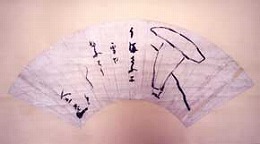
One of the haiku poets who represent the Edo period. He lost his mother at three, and at eight a stepmother came into the house. Unable to settle with her, he went to Edo to work, and from about twenty-five began to study haikai. From his late twenties until he was thirty-six he travelled the provinces, training in haikai. At thirty-nine he returned home and nursed his sick father, who died about a month later; he then quarrelled with his stepmother over the inheritance for twelve years. He went back to Edo and made his living teaching haikai. At fifty he returned to his home village, and the following year settled the inheritance, obtaining fields and staying for good. He married at fifty-two, but lost his wife and children one after another, and his house burned down. Out of his own hard experience he made a haiku manner unlike the polite verse of the day, full of affection for the weak and of human feeling. His best-known collections are “Ora ga Haru” and “Bunka Kucho”.