Tokyo Art Club Fair 2026
October 16 (Fri) – October 18 (Sun), 2026
It is now some ten years since we quietly made bijinga — paintings of beautiful women — our speciality.
Our fondness for the genre began, in fact, with our respect for Fukutomi Taro.
Fukutomi Taro was a customer of Shibunkaku, the firm run by my grandfather, where my father worked for many years before he founded SHUKADO.
He was a self-made man who built a chain of cabarets — a success story in the fullest sense.
They called him Cabaret Taro. And he was famous as a collector of bijinga.
In 2003, when my father and I were setting up a new gallery, one of the books we took as our guide was his.
In his writing, the story behind each painting, the place a work held in the life of the painter who made it, and the trouble he had gone to in order to get hold of it, were all set down as vividly as a detective novel.
Meet Fukutomi and he would say, with a straight face:
I don’t much like women, and I have no wish to go to a cabaret myself.
Then why collect pictures of women? One does not ask — it would be crude.
The answer spills out between the lines of his books anyway.
There will be several answers. To put it plainly: because he really did like women.
And besides — you cannot collect several dozen women in the flesh, but nobody complains if you buy several hundred pictures of them.
Your wife might.

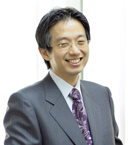
I am the second head of SHUKADO, and the third generation of the Tanaka family to deal in art. I grew up close to art and to old painting and calligraphy, but when I was young my interest was almost entirely in the cinema. Since I began working in art I have often thought what a waste those years were, spent without knowing how rich a world this is. Drawing on my earlier work as a systems engineer, and on the manual work before that (does film count?), I want SHUKADO to be an art company that is intelligent, expressive and warm — where the work and the welcome come from every member of staff, each putting their whole heart into it, rather than from one person alone.