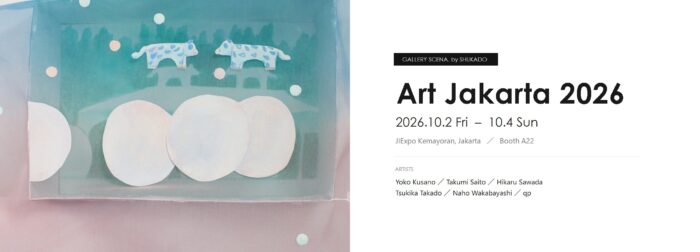
Art Jakarta 2026
October 2 (Fri) – October 4 (Sun), 2026
Jiaocai, which came up in Chen Peii’s profile, is — to put it simply — a way of working that uses the same technique as nihonga.
Oil painting is named for the oil that fixes the pigment; watercolour for the water the paint is dissolved in; acrylic paint for the acrylic resin that binds it. In the same way, painting in which mineral pigments are fixed with nikawa — animal glue — is called kosaiga, glue-colour painting.
Note: nikawa is a substance whose main constituent is gelatin, drawn out of the bones, skin and sinews of animals.
It is a curious and rather pleasing thing, when you think about it, that a technique and its paints should be named not for the pigment that does the real work of colouring, but for the binder in between, which is by and large colourless. And it is a thoroughly rational way to classify them.
In Japan this kosaiga is usually gathered under the broad heading of nihonga, so you may seldom hear the word at all.
In Taiwan the same two characters are read jiaocai.
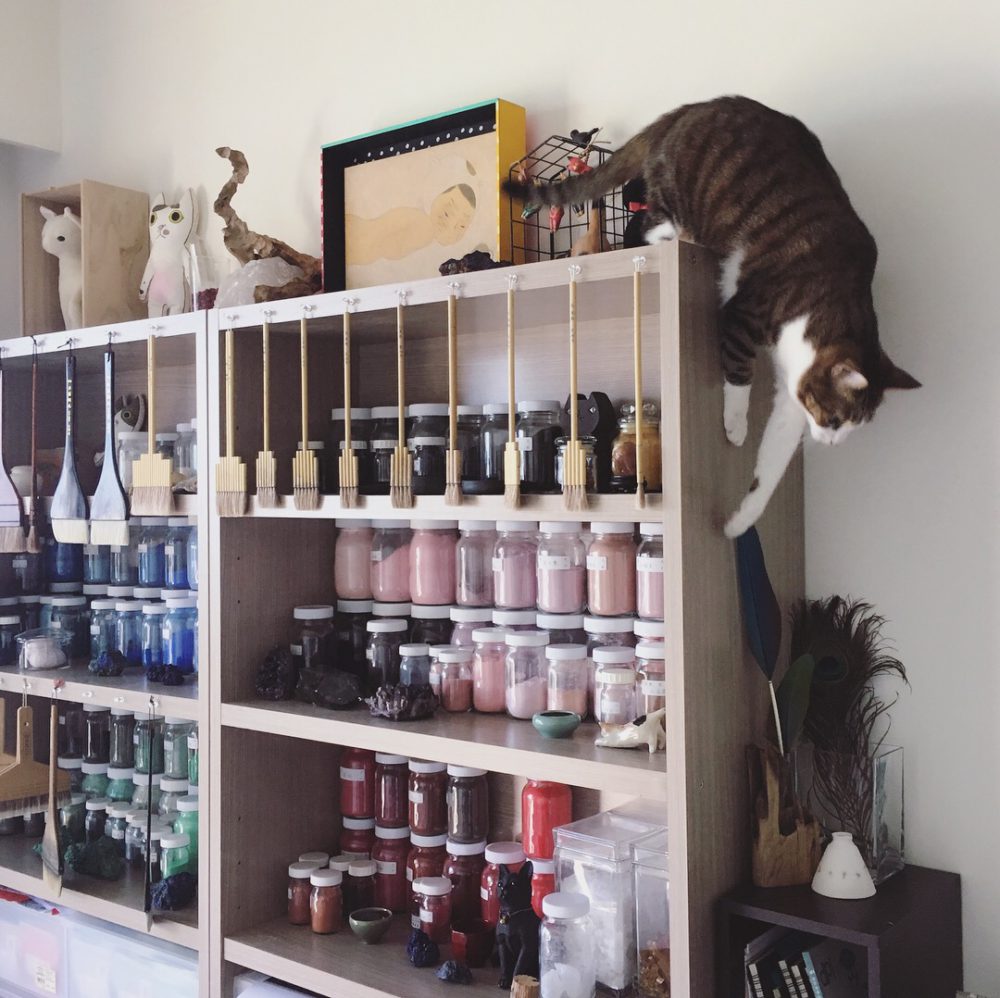
Chinese guohua, in the main line of painting in China, also uses mineral pigment — it is called yancai today — but the jiaocai technique that began to develop in Taiwan before and after the war is, if anything, closer to nihonga. (Within the guohua line, mineral pigment work seems to be called yancai rather than jiaocai.) Behind this lie the teaching of Japanese painters who moved to Taiwan at that time and gave themselves to the development of art there, and the rich exchange that followed.
That said, the beauty of mineral pigment — the way it takes the light, the strange permanence of a natural colour that does not shift — must appeal in any country.
Chen’s jiaocai in this exhibition pairs the finely drawn hair of the cat with paint laid on so thickly that it stands up from the surface, a technique of her own; the carpets and tapestries are as much a pleasure as the animals.
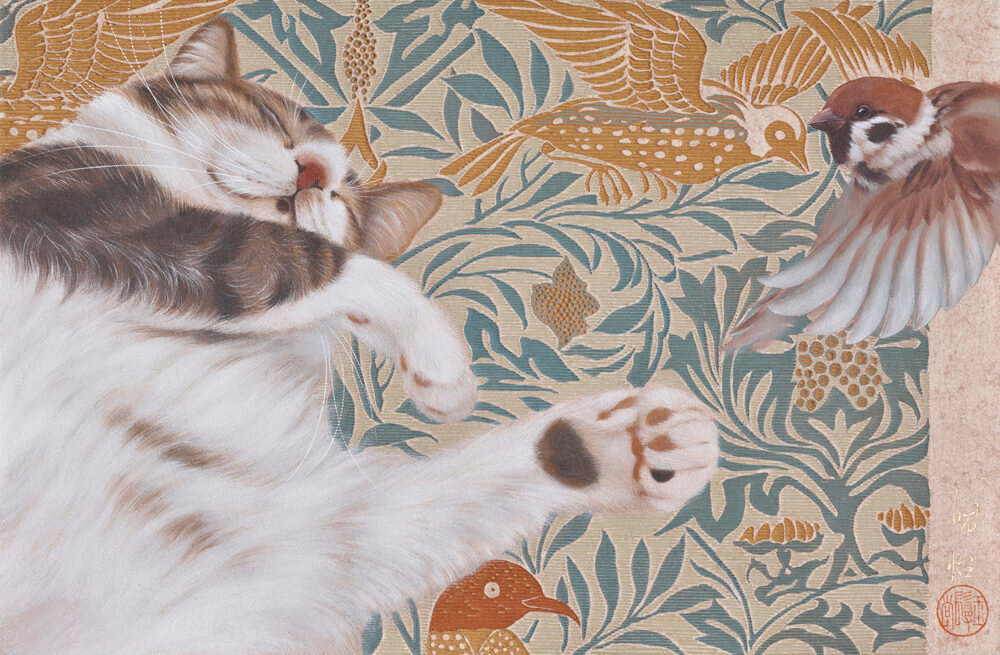
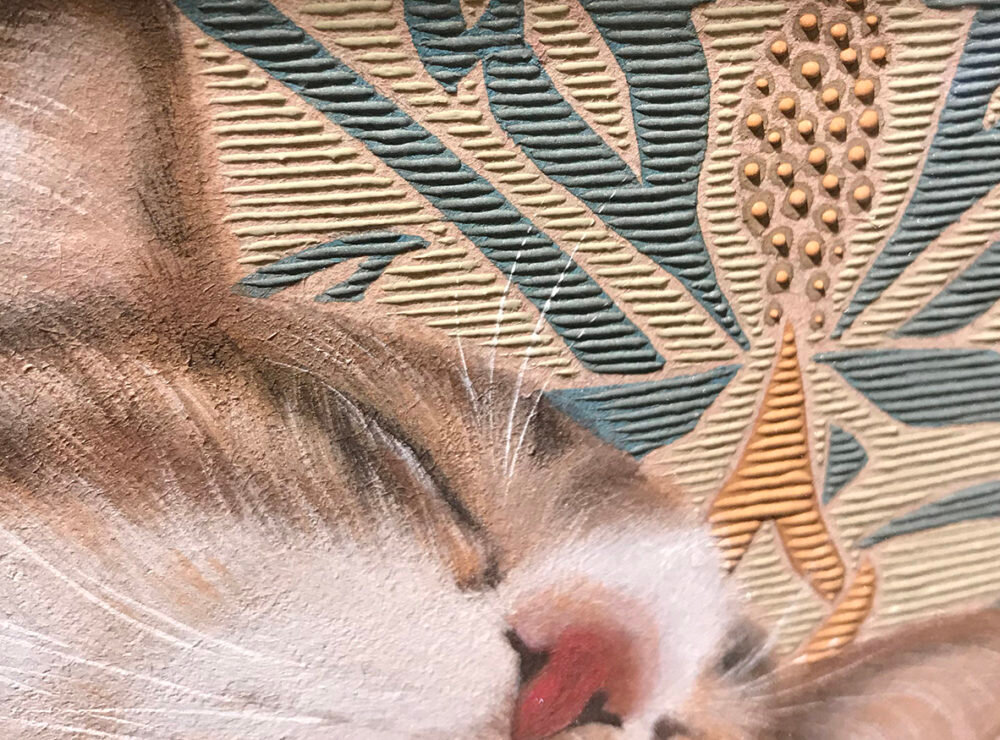
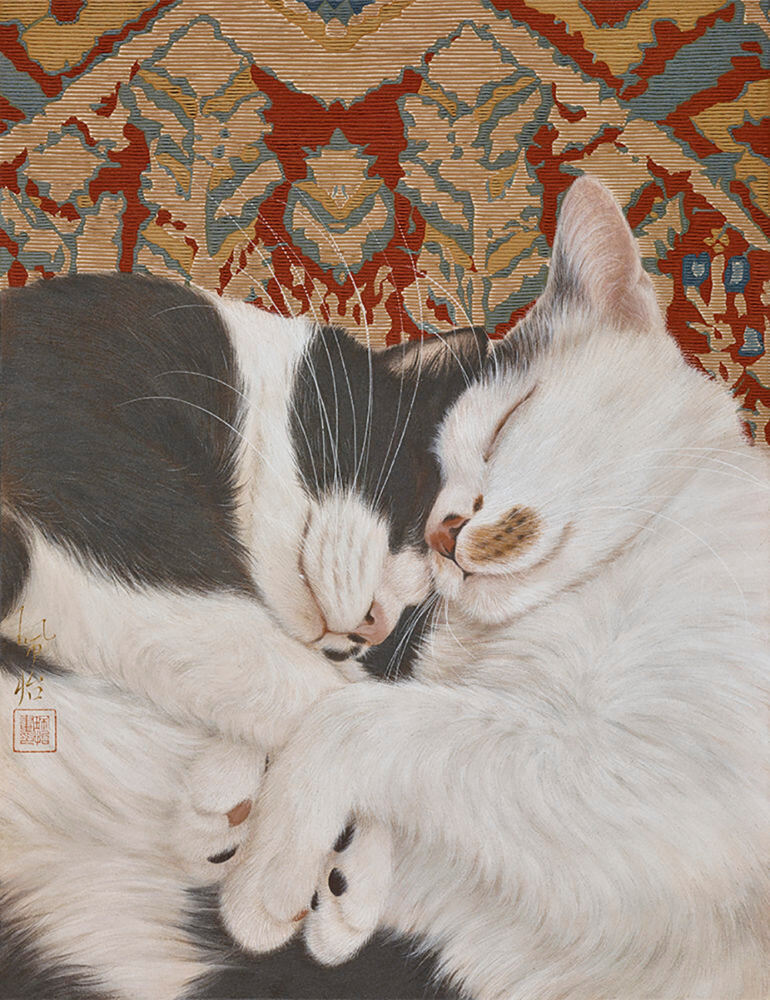
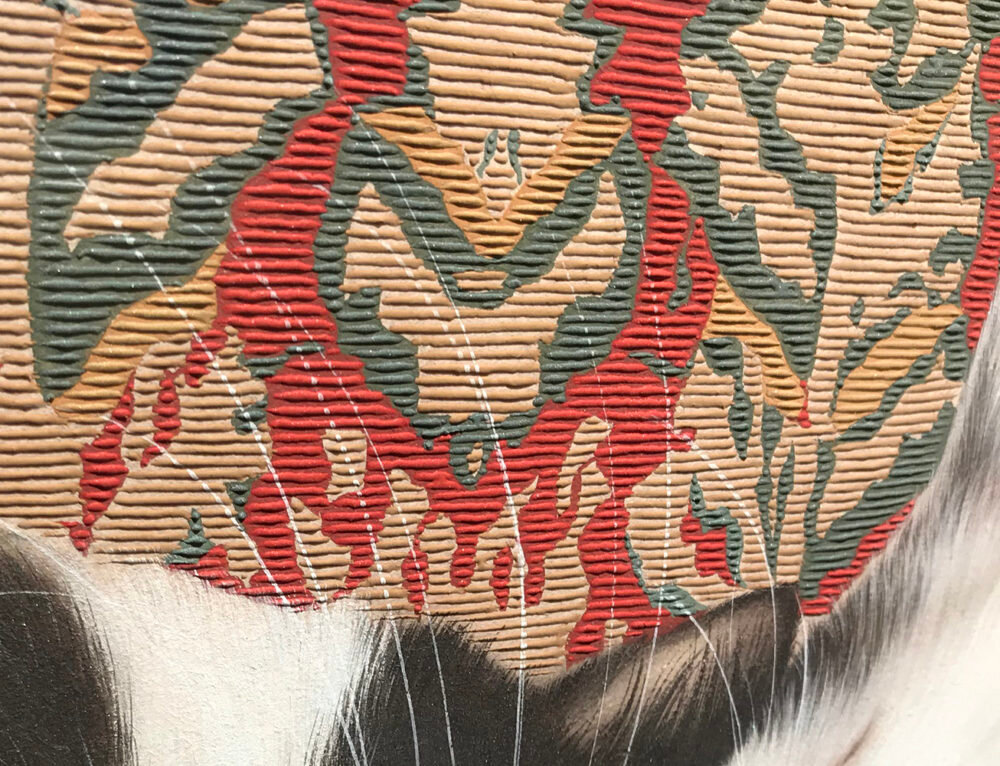
No painting, in any technique, can be felt to the full without the work itself in front of you.
Do come and see jiaocai by the finest painter of cats in the East.
The Chen Peii solo exhibition runs until Wednesday 4 March 2020. Chen Peii solo exhibition
Adapted from our email magazine, Nihon Bijutsu So Datta no ka Tsushin, vol. 387.